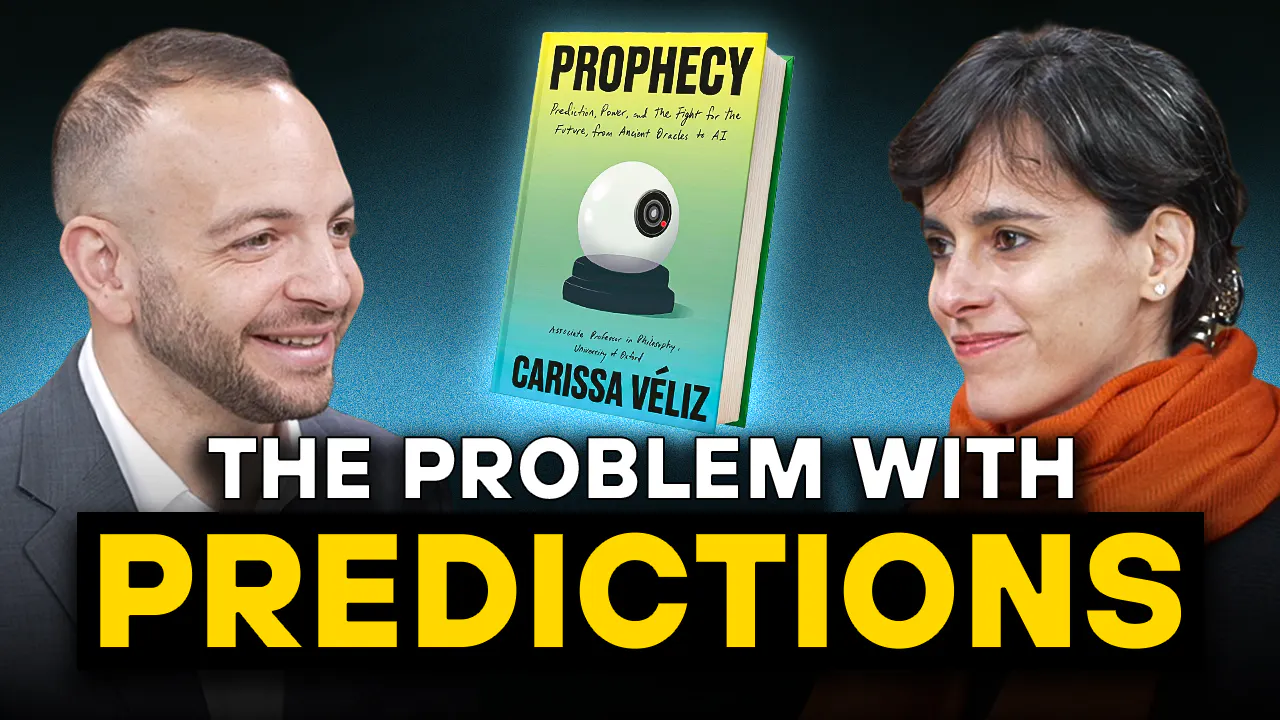
The proliferation of prediction in modern society, from AI algorithms to financial markets, risks eroding human agency and institutional fairness. Oxford philosopher Carissa Véliz, author of *Prophecy, Prediction, Power and the Fight for the Future*, argues that treating probabilistic guesses as facts creates "Kafkaesque" systems where individuals cannot contest life-altering decisions like loan denials or job rejections. These predictive tools often function as self-fulfilling prophecies, creating the very realities they purport to forecast while masking systemic biases. Véliz highlights the dangers of gamifying global stability through prediction markets, noting how insider information and public perception can manipulate outcomes like military conflicts. To counter this algorithmic gloom, she advocates for grounding society in the "analog world" and utilizing humor as a democratic tool. Because large language models prioritize pleasing users over truth-tracking, maintaining human irreverence and embracing the inherent uncertainty of the future remains essential for preserving political and personal freedom.
Sign in to continue reading, translating and more.
Continue