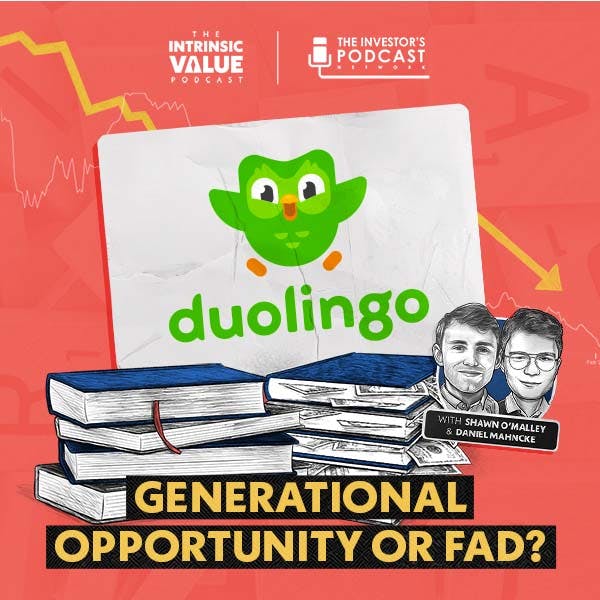
Duolingo's business model, competitive advantages, and future prospects are analyzed, questioning its potential as a trillion-dollar company. The discussion centers on Duolingo's gamification of language learning, its effectiveness, and the balance between user engagement and monetization. The hosts debate whether Duolingo's marketing strategy, reliant on unhinged social media content, indicates a weakness in attracting serious learners. AI's potential disruption, particularly real-time translation, poses a significant threat, challenging the long-term value of language learning apps. Despite these concerns, Duolingo's brand recognition, extensive user data, and expansion into other educational areas like math and chess are noted as potential strengths. The hosts also explore the challenges of monetizing users outside the US and Europe, where willingness to pay for convenience is lower.
Outlines
Part 1: Introduction, Mission, and Founders
Part 2: Product Mechanics and Gamification
Part 3: Growth, Monetization, and Data
Part 4: AI Disruption and Market Risks
Part 5: Competitive Moats and Advantages
Part 6: Global Challenges and Human Value
Part 7: Investment Thesis and Bear Case
Part 8: Financial Analysis and Valuation
Part 9: Conclusion and Final Verdict
Sign in to continue reading, translating and more.