

Why Anthropic Thinks AI Should Have Its Own Computer — Felix Rieseberg of Claude Cowork & Claude Code Desktop

Latent Space: The AI Engineer Podcast
The Latent Space podcast features Felix Rieseberg from Anthropic, who discusses Claude Cowork, a user-friendly version of Cloud Code. Rieseberg explains that Cowork allows non-technical users to leverage Cloud Code for tasks like managing expenses and organizing knowledge bases. He draws parallels between Cowork and Visual Studio Code, emphasizing hackability and extendability. The conversation explores the design process behind Cowork, highlighting Anthropic's prototype-driven culture and the decision to prioritize local computer value. Rieseberg and the hosts delve into the architecture of Cowork, focusing on the virtual machine's role in safety and Claude's ability to install necessary tools. Swyx shares his experience using Claude Cowork to automate video uploads and create skills, while Rieseberg shares how he uses it to manage his calendar. The discussion also touches on the future of skills portability and the potential impact of AI on the labor market.
Part 1: Introduction, Product Concept
00:06Cowork: A User-Friendly Tool Evolved from Cloud Code for Non-Coding Workloads
Cowork: A User-Friendly Tool Evolved from Cloud Code for Non-Coding Workloads
The Latent Space Podcast records its first episode in the new Kernel studio. Felix Rieseberg from Anthropic introduces Cowork, a user-friendly version of Cloud Code, designed for non-technical users. Cowork runs Claude Code in a virtual machine with added safety and convenience. While initially pitched as a simpler version, it has become a powerful tool integrating with Cloud and Chrome. Felix shares an anecdote about a designer using Cowork to animate an emoji, highlighting its unexpected applications. He expresses interest in seeing how Latent Space uses Cowork.
04:54Anthropic's Design Philosophy: Rapid Prototyping and Valuing Local Computer Execution
Anthropic's Design Philosophy: Rapid Prototyping and Valuing Local Computer Execution
Alessio inquires about the design process behind Cowork, which was built in just 10 days. Felix explains that Anthropic emphasizes rapid prototyping and demo-first development. Instead of extensive planning, they build multiple candidates quickly and select the best ones. A key decision was valuing execution on the local computer rather than in the cloud, citing the flexibility of downloading and processing files locally. Felix notes that the holistic platform is useful, and the team did not rebuild Cloud Code, but built on top of it.
10:36Defining Cloud Cowork: Virtual Machine, System Prompts, and Chrome Integration
Defining Cloud Cowork: Virtual Machine, System Prompts, and Chrome Integration
Swyx seeks to build a good mental model of Cloud Cowork. Felix says that the virtual machine is the most powerful thing, providing safety and security. He emphasizes anthropomorphizing Claude, giving it its own computer to install necessary tools. The system prompt is also important, inferring user needs to make the system more effective. Tight integration with Cloud and Chrome allows Claude to perform tasks without navigating complex MCP connectors. Felix believes Silicon Valley undervalues the local computer, arguing that Claude needs access to the same tools as the user.
Part 2: Use Cases, Automation, Privacy
17:31Local vs. Cloud: Privacy Concerns and the Agentic Future
Local vs. Cloud: Privacy Concerns and the Agentic Future
Felix discusses the trade-offs between running tasks locally versus in the cloud, raising concerns about cloning an entire computer into the cloud and the potential privacy implications. He suggests that the world isn't ready for such a move. Swyx shares how he uses Claude Cowork to automate the laborious process of uploading recordings to YouTube, including downloading from Zoom, compacting videos, and extracting information from video frames. He also uses it to create skills, which are then reused.
27:05Automating Knowledge Work: Skills, Chrome Integration, and User Ergonomics
Automating Knowledge Work: Skills, Chrome Integration, and User Ergonomics
Swyx demonstrates how he uses Claude Cowork to automate tasks, such as managing his calendar and cleaning up his desktop. Felix notes that skills are easy to create and can be hyper-personalized. Swyx explains how he splits and orchestrates skills to improve automation. He also uses Claude Cowork to programmatically upload to YouTube, leveraging its Chrome integration. Felix emphasizes the importance of meeting users where they are and integrating with their existing workflows rather than replacing applications.
37:08Skills Portability, Industry Impact, and the Future of Work
Skills Portability, Industry Impact, and the Future of Work
Alessio raises the issue of skills portability across different agent harnesses. Felix says that skills are file-based, making them portable. He also acknowledges the challenge of balancing portable and personal components within skills. The conversation shifts to the potential impact of AI on various industries, with concerns about the labor market, especially for junior employees. Alessio suggests creating simulated jobs to provide accelerated learning experiences.
Part 3: Technical Implementation, Security
45:28Preparing for AI Takeoff: Education, Adaptation, and Societal Impact
Preparing for AI Takeoff: Education, Adaptation, and Societal Impact
Felix notes that Anthropic believes the impact of AI on the market will be sizable and that society needs to discuss it more. Swyx suggests that frequent releases help people adjust over time. Felix wonders when full AI takeoff will occur, leading to a self-reinforcing loop. He believes that even if the exact timing is uncertain, it's important to wrestle with the implications.
52:06Data Analysis, Tax Season, and the Importance of Computer Use
Data Analysis, Tax Season, and the Importance of Computer Use
Swyx shares that Claude Cowork is organizing his files, and Felix encourages him to let Claude figure out the best approach. The conversation touches on using Claude for finance and tax season. Felix mentions that Anthropic has dedicated teams focused on verticals and enterprise applications. Swyx emphasizes the importance of vision for everything and praises Anthropic for pioneering computer use. Felix discusses the relationship between the user and the computer, highlighting the challenges of balancing power and control.
1:00:03Virtual Machines, Windows Support, and the Importance of Sandboxing
Virtual Machines, Windows Support, and the Importance of Sandboxing
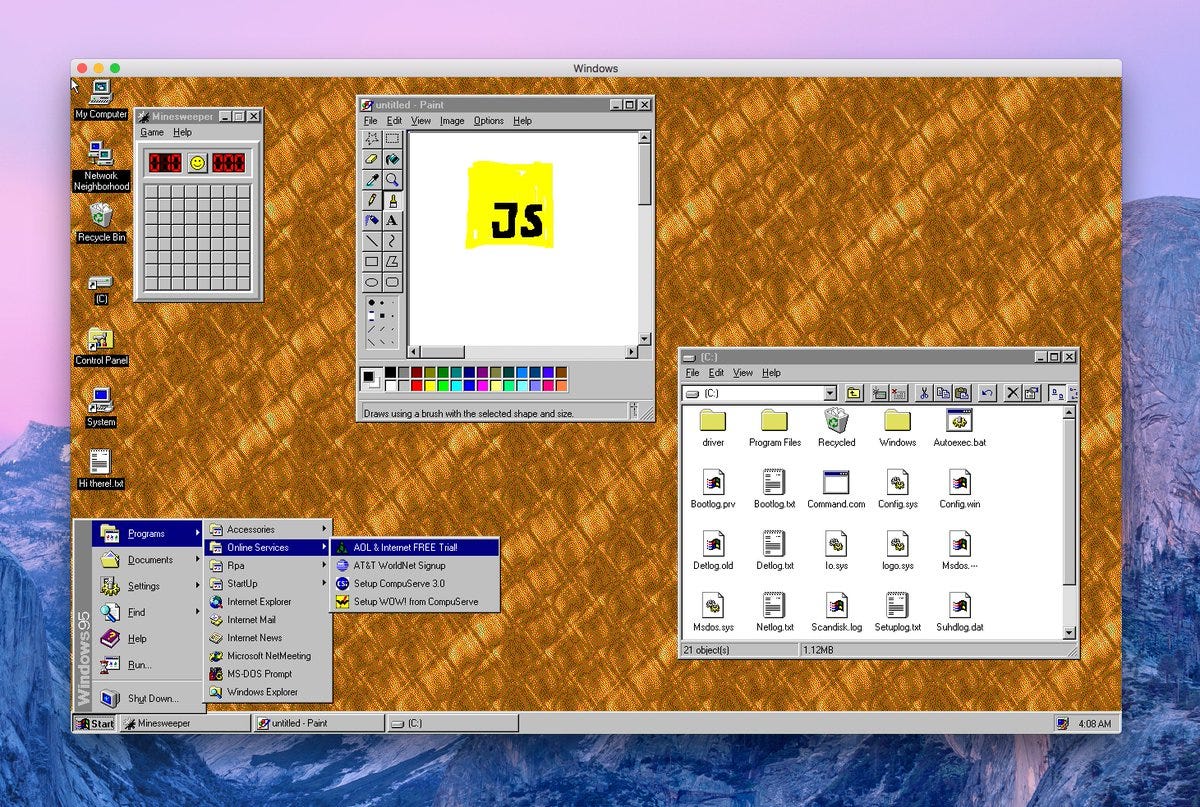
Alessio suggests using a virtual box app to run Claude, allowing users to jump in and out of the environment. Felix shares his experience with the Windows 95 project, highlighting the power of JavaScript and WASM. He discusses the technical details of the virtual machine used in Cowork, including the Windows host compute system. Felix emphasizes the importance of sandboxing to separate Claude's computer from the user's computer, improving security and manageability.
1:11:11Balancing Safety and Security: The Swiss Cheese Model and the Future of Cowork
Balancing Safety and Security: The Swiss Cheese Model and the Future of Cowork
Felix says that the industry needs to move beyond the dichotomy of approving every step or dangerously skipping permissions. He advocates for investing in systems that allow delegation and trust, using the Swiss cheese model for security. Swyx notes that safety and security are often seen as boring by engineers, but they are crucial for consumer adoption. Felix outlines the future of Claude Cowork, focusing on iterating quickly, doubling down on the local computer, and enabling Claude to take on bigger tasks independently.
Part 4: Future Outlook, Operating Systems
1:21:24Chrome as the Super Operating System: Electron, Tori, and the Future of Native Apps
Chrome as the Super Operating System: Electron, Tori, and the Future of Native Apps
Felix shares his take on Electron, explaining why it ships with an entire version of Chromium. He notes that operating system rendering engines are not good enough, and Chromium provides the best rendering experience across different machines. Swyx mentions an upcoming interview with Mark Andreessen, who believes that Chrome is the actual operating system. Felix says that the AGI moment he's waiting for is when native apps can be built without Electron.
Sign in to continue reading, translating and more.
Open full episode in Podwise