

Agents, codebases, and teams — Aditya Khandelwal, Amazon AGI Lab
11 Aug 2026
16m

We turn high signal in-person events for the top AI engineers, founders, leaders, and researchers in the world into the best free learning opportunities for millions around the world here on YouTube. Your subscribes, likes, comments, speaking, attendance, or sponsorships goes a long way toward making our biz model sustainable indefinitely. We strongly believe this industry deserves a better class of community and that we know how to do this well; we just need your support.

RL post-training efficiency hinges on decoupling the trainer from the rollout fleet to overcome the constraints of tightly coupled RDMA clusters. By shifting from full checkpoint synchronization to sparse, bit-level weight diffs, rollout workers can operate on elastic, distributed compute across global regions. This ap...
Multiplayer agentic engineering focuses on integrating AI agents into team workflows to enhance productivity and collaboration. To achieve this, teams should adopt a model-agnostic approach, allowing for seamless switching between models based on performance and cost data specific to their own codebase. By centralizing...

AI-driven software development requires a shift from mere experimentation to rigorous engineering to ensure code reliability, security, and maintainability. While AI tools boost initial productivity, they often introduce "verification debt"—a persistent accumulation of code quality issues and security vulnerabilities—d...

Velocity sickness—the stress caused by rapid, AI-driven output that lacks genuine impact—stems from outdated workflows that prioritize implementation over strategic decision-making. As AI agents handle coding tasks, engineering teams must pivot from isolated, ephemeral chat-based environments to shared, durable documen...

Claude Managed Agents provides a production-grade infrastructure designed to bridge the gap between rapidly evolving AI model capabilities and the rigid, often stale, harnesses used to deploy them. By decoupling the agent’s "brain"—the reasoning loop—from its "hands"—the tool execution environment—this architecture imp...

Refactoring a legacy AI pipeline from multiple repositories into a single monorepo significantly enhances shipping velocity and developer engagement. At Wisedocs, this six-month initiative addressed critical issues, including slow performance and unmaintainable code, ultimately enabling the team to support larger files...

The evolution of digital computing, from Vannevar Bush’s 1945 vision in "As We May Think" to the current era of AI agents, reveals a consistent trajectory toward more intuitive, multimodal human-computer interaction. Just as the transition from static web pages to dynamic mobile applications redefined software utility,...

The open-source community faces a critical decline as AI-driven automation fosters skepticism, security risks, and a flood of low-quality contributions. While closed-source AI labs currently subsidize high inference costs to lock developers into their ecosystems, this strategy is unsustainable. Businesses are increasin...


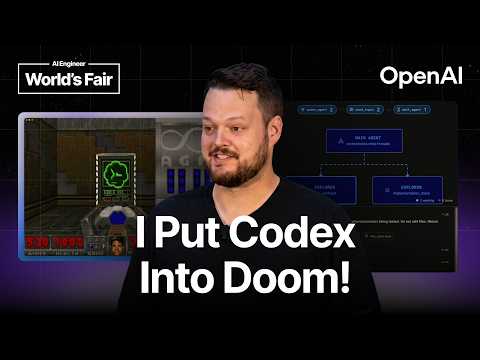
The Codex harness serves as an open-source framework for building agentic AI, utilizing the app server protocol for UI communication and the responses API for LLM inference. Efficient context construction remains critical, achieved through deferred tool loading and capped skill lists to manage token budgets and prevent...


Model routing optimizes AI production by dynamically delegating tasks to the most appropriate model based on complexity, cost, and domain specificity. Rather than relying on a single frontier model, developers achieve higher performance and cost efficiency by using a primary orchestrator to manage sub-agents or "sideki...


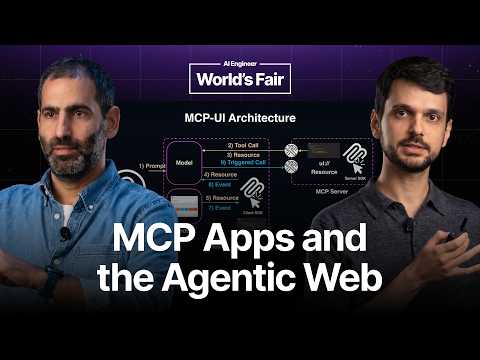
MCP Apps revolutionize the agentic web by enabling services to transmit interactive, branded UI components directly into AI chat interfaces, replacing inefficient text-based interactions. By leveraging the Model Context Protocol, this framework allows applications like Shopify or PostHog to deliver functional widgets t...

MCP Tasks represent a critical evolution in agentic workflows by enabling long-running, asynchronous processes that survive infrastructure failures and human-in-the-loop delays. The current lack of widespread client support stems from the high complexity of implementing durable state management, as demonstrated by the ...
Follow this podcast in Podwise
Sign in to get AI summaries, transcripts and mind maps for any episode, including new ones.