
Podcast cover
Wes Bos & Scott Tolinski - Full Stack JavaScript Web Developers · Technology

Syntax - Tasty Web Development Treats

Full Stack Developers Wes Bos and Scott Tolinski dive deep into web development topics, explaining how they work and talking about their own experiences. They cover from JavaScript frameworks like React, to the latest advancements in CSS to simplifying web tooling.

Episodes

Episode cover

1003: Skills Skills Skills

11 May 2026
25m
AI processed

AI "skills"—markdown files defining agent capabilities—provide a flexible alternative to rigid scripts for automating development workflows. By embedding specific rules and preferences directly into an agent's context, developers can improve output quality for tasks like social media content management, CSS motion desi...

Episode cover

1002: The Real Pricing of LLMs

06 May 2026
52m
AI processed

GitHub’s shift to usage-based billing for Copilot signals the end of subsidized AI tools, as high token consumption forces companies to prioritize profitability over all-you-can-eat subscriptions. Developers face increasing security threats, such as malicious code hidden in interview assignments, necessitating extreme ...

Episode cover

1001: Managing Deadlines + Stress

04 May 2026
33m
AI processed

Managing stress during tight software development deadlines requires a shift from reactive panic to structured, methodical planning. Breaking complex projects into granular tasks within an issue tracking system clears mental clutter and reveals hidden dependencies, such as missing API access or regulatory requirements....

Episode cover

1000: Syntax Episode 1,000!

29 Apr 2026
1h 12m
AI processed

Syntax celebrates its 1000th episode by reflecting on the show's evolution from a 2016 brainstorming document to a professional production team. The hosts analyze data from 771 transcribed episodes, revealing that they have generated over 5.7 million words and 31 days of continuous audio. Key insights include the shift...

Episode cover

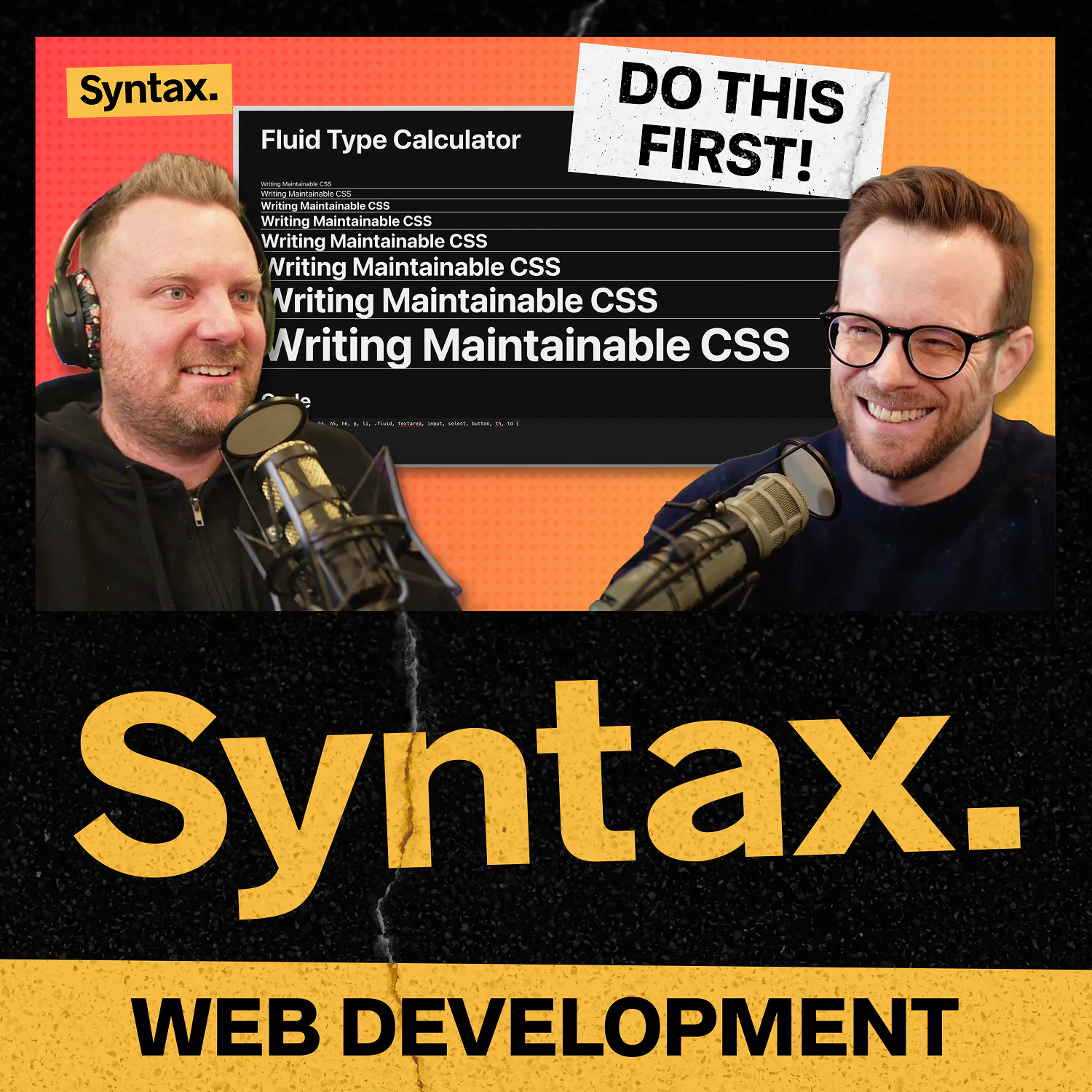
999: Writing Maintainable CSS

27 Apr 2026
50m
AI processed

Maintainable CSS requires a disciplined approach to project structure to prevent long-term code rot and ensure scalability. Key strategies include leveraging component-scoped CSS to prevent style leakage, utilizing CSS variables for consistent design tokens, and adopting modern features like CSS layers and container qu...

Episode cover

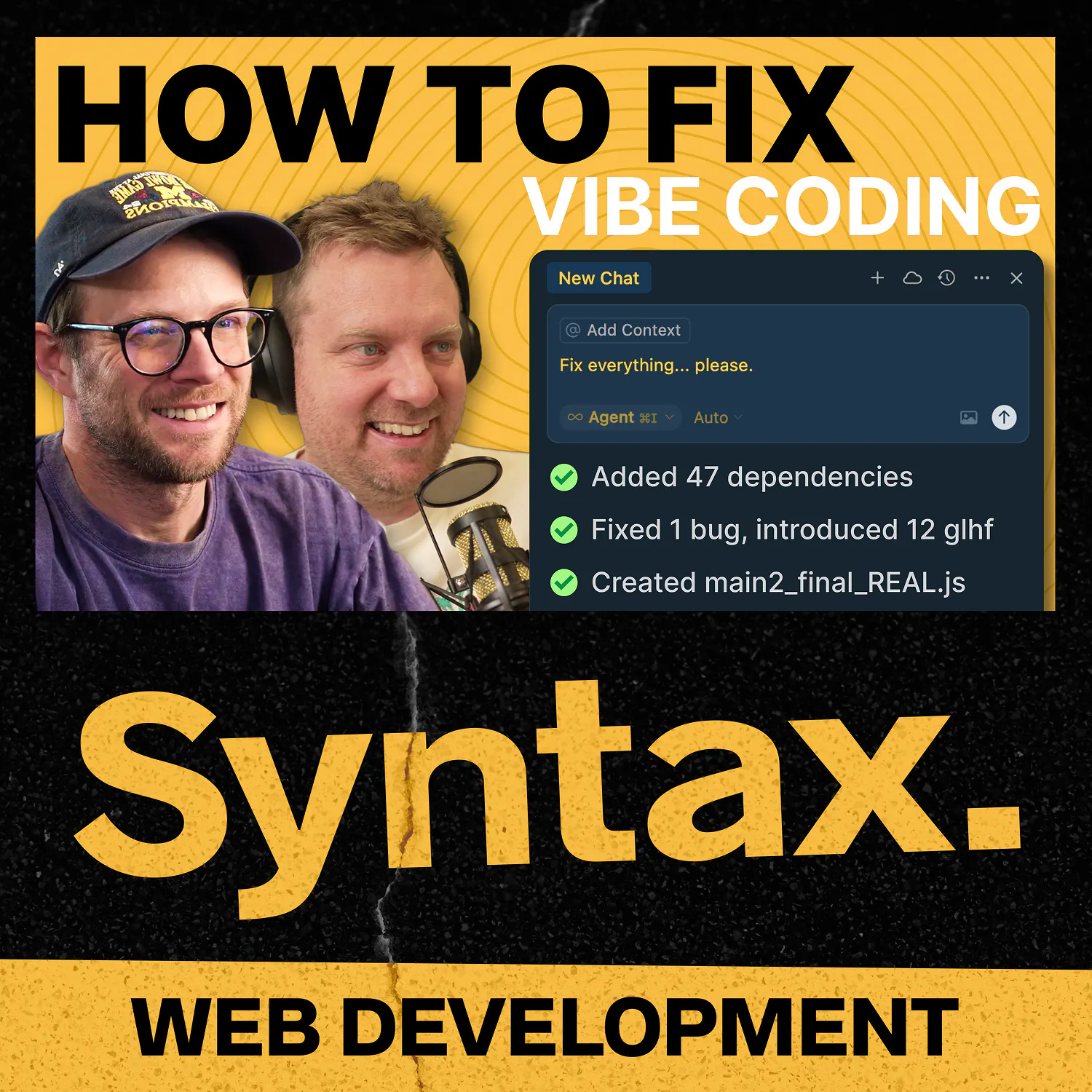
998: How to Fix Vibe Coding

22 Apr 2026
44m
AI processed

Transitioning from "vibe coding" to deterministic software development requires integrating rigorous code quality, bug finding, and formatting tools into AI-driven workflows. Fallow serves as a comprehensive solution for identifying dead code, circular dependencies, and complexity hotspots, preventing the "slop" often ...

Episode cover

997: Rating and Roasting Your Projects

20 Apr 2026
53m
AI processed

Developers increasingly face the challenge of building efficient, deterministic tools to manage the growing complexity of AI-driven workflows and project maintenance. This session highlights a variety of specialized utilities, including JSON Alexander for browser-based data inspection, FFF for high-speed file searching...

Episode cover

996: 10 New CSS and HTML APIs

15 Apr 2026
31m
AI processed

Modern web development is undergoing a significant shift with the introduction of powerful new CSS and HTML APIs designed to streamline complex UI implementations. The CSS Grid Lanes property finally enables native masonry-style layouts, eliminating the need for brittle workarounds or fixed-height constraints. Simultan...

Episode cover

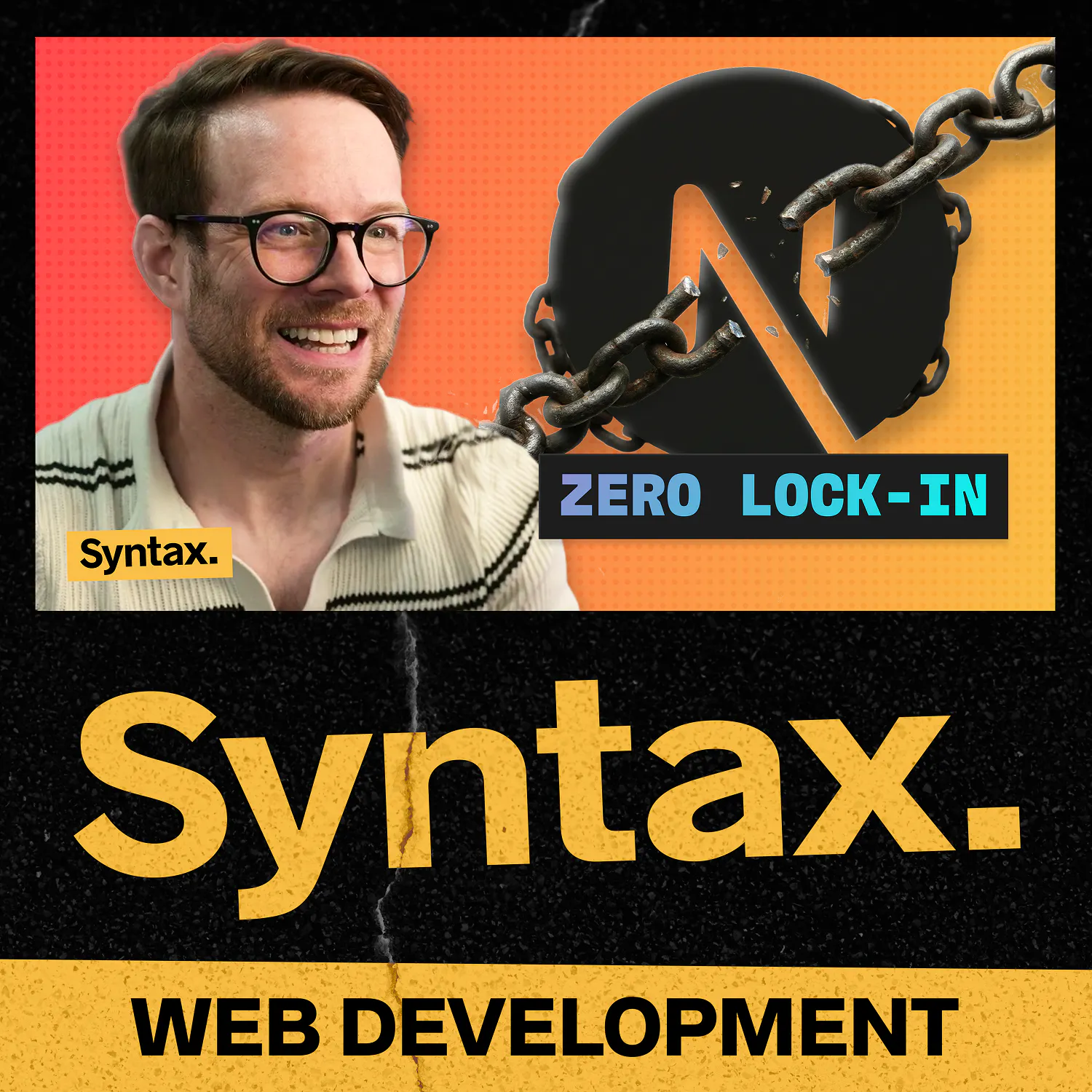
995: Next.js Vendor Lock-in No More

13 Apr 2026
1h 4m
AI processed

Next.js lead developer Tim Neutkens and head of Next.js Jimmi Lai detail the release of the stable Adapters API, a framework designed to standardize Next.js deployment across diverse hosting providers and runtimes like Cloudflare, Netlify, and Bun. This integration layer eliminates the need for platform-specific hacks ...

Episode cover

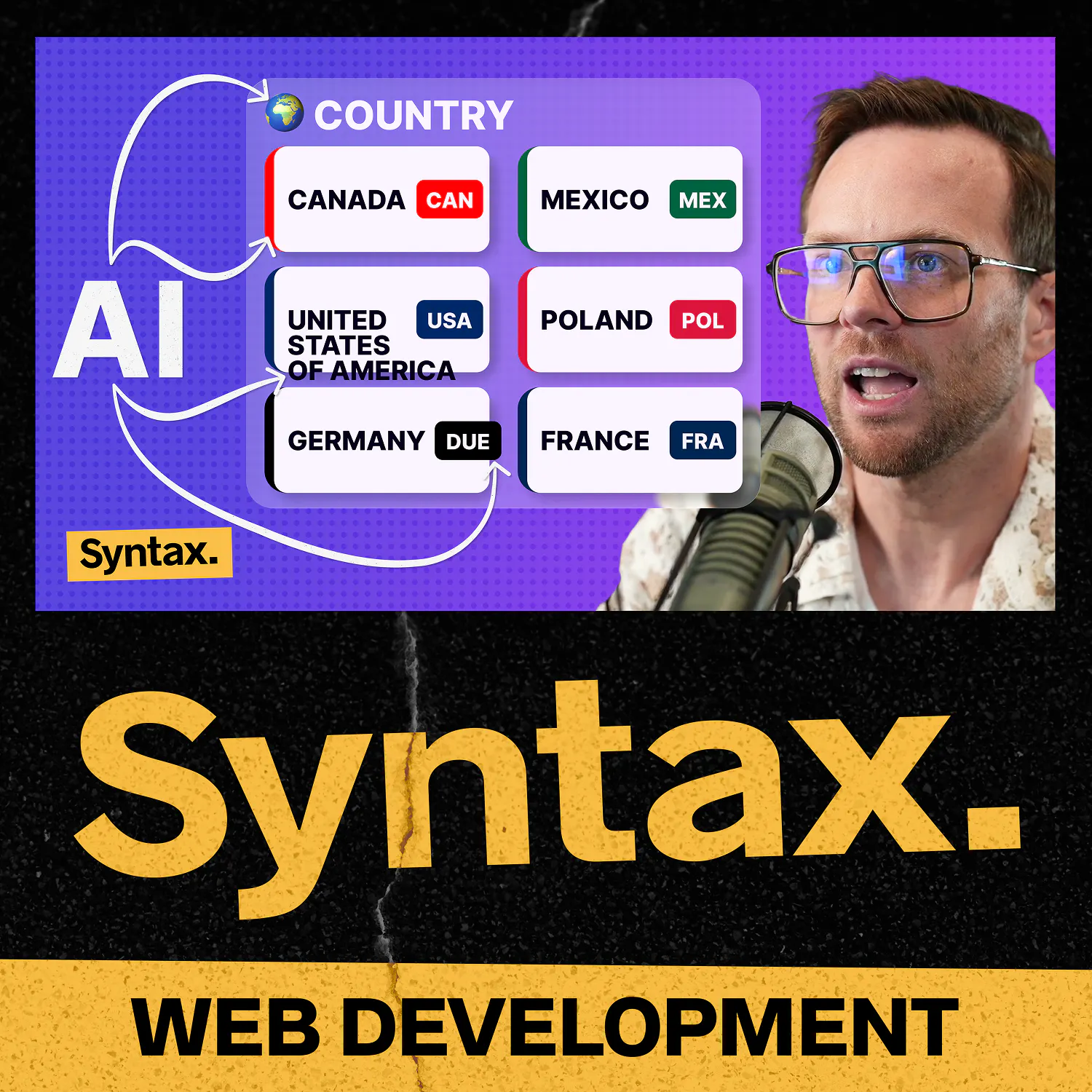
994: AI Sucks At CSS

08 Apr 2026
1h 0m
AI processed

The podcast episode addresses listener questions about AI's role in web development, design, and software performance. The hosts discuss AI's shortcomings in CSS design, noting its tendency to produce generic and sometimes bloated code, even with design systems in place. They explore the balance between leveraging AI f...

Episode cover

993: It’s Been A Hell Of Week

06 Apr 2026
38m
AI processed

This podcast episode dives into recent web development news, starting with the leak of Claude Code's source map and the implications of exposing unminified code, including spinner verbs and swear word regexes. The hosts then discuss the Axios hack involving a Remote Access Trojan (RAT) and the broader risks of dependen...

Episode cover

992: Migrating Legacy Code Just Got Easier

01 Apr 2026
29m
AI processed

The podcast explores the use of AI in migrating codebases to new languages and frameworks, focusing on the challenges and benefits of such transitions. Wes shares his experience of migrating a course platform from Express to Hono, emphasizing the importance of making deliberate tech choices, establishing coding pattern...

Episode cover

991: Vite’s bet on Cloudflare (VOID Framework)

30 Mar 2026
38m
AI processed

The panel explores Void, a new full-stack JavaScript framework and deployment platform from Void Zero tightly coupled with Cloudflare. The discussion centers on whether Void's Cloudflare-centric design offers unparalleled developer experience or problematic vendor lock-in. Key points include Void's support for multiple...

Episode cover

990: Vite Is Taking Over (Vite+)

25 Mar 2026
33m
AI processed

The podcast explores Vite+, a unified toolchain for JavaScript development, focusing on its potential to consolidate various tools like linters, formatters, and task runners into a single, efficient system. The discussion highlights the shift of Vite+ to an open-source model and its benefits, such as simplifying config...

Episode cover

989: State of JS 2025

23 Mar 2026
1h 4m
AI processed

The State of JS 2025 survey results are analyzed, focusing on JavaScript libraries, tools, and their shifting popularity. A key observation is the "backward C" shape in the popularity charts, indicating initial enthusiasm followed by disillusionment for many libraries like Express and React. Exceptions like Solid, VTes...

Episode cover

988: Cloudflare’s Next.js Slop Fork

18 Mar 2026
47m
AI processed

The podcast explores the creation of Vinext, Cloudflare's port of Next.js to Vite, primarily focusing on the role of AI in its development. Steve Faulkner, Director of Engineering at Cloudflare Workers, details how he utilized AI models like Opus to accelerate the project, leveraging the Next.js test suite to guide the...

Episode cover

987: Remote Coding Agents

16 Mar 2026
47m
AI processed

The podcast explores the concept of remote coding agents, highlighting their utility in enabling developers to initiate and manage coding tasks from various locations and devices. Wes and Scott share personal anecdotes of tethering devices to maintain agent activity while away from their desks, illustrating the flexibi...

Episode cover

986: Does Code Quality Matter Anymore?

11 Mar 2026
58m
AI processed

The podcast episode addresses web development questions, including navigation techniques using Dialog and Popover, the relevance of well-organized code in the age of AI, and strategies for supporting older browsers with modern CSS features. The hosts debate whether new web technologies negate the need for traditional c...

Episode cover

985: Stop putting secrets in .env

09 Mar 2026
47m
AI processed

The podcast explores the security risks associated with storing secrets in .env files and introduces Varlock as a solution. It addresses the common practice of using .env files due to readily available tutorials, while highlighting the dangers of exposing plain text secrets to AI coding agents. Varlock unifies schema i...

Episode cover

984: How to Make a DOM Library Render Anything w/ Paolo Ricciuti

04 Mar 2026
49m
AI processed

The podcast explores Svelte custom renderers, focusing on how Svelte is evolving from a DOM-centric library to one capable of rendering to various targets. Paolo Ricciuti, a Svelte maintainer at Mainmatter, explains how Svelte differs from React by directly interacting with the DOM rather than using a virtual DOM. A ke...

Page 3

Follow this podcast in Podwise

Sign in to get AI summaries, transcripts and mind maps for any episode, including new ones.

Open in Podwise